A Complete Guide to Professional Chemical Peel Treatments in Coventry
Healthy, radiant skin is something many people wish to achieve, but everyday factors such as ageing, environmental exposure, uneven pigmentation and the natural build-up of dead skin cells can leave the complexion looking dull or tired.
While a consistent skincare routine is essential, sometimes professional treatments can offer additional support in improving the appearance and texture of your skin.
One treatment worth considering is a chemical peel, a professional skin-resurfacing procedure designed to exfoliate the skin and encourage a fresher, smoother-looking complexion.
At Maria Beauty Clinic in Coventry, we understand that every person’s skin is different. Whether you are concerned about dullness, uneven texture, superficial pigmentation or early signs of ageing, understanding how chemical peels work can help you make an informed decision about your skincare options.
In this guide, we explore the benefits of chemical peels, what happens during treatment, recovery expectations and the essential aftercare steps to consider.
1. What Is a Chemical Peel?
A chemical peel is a skin treatment that uses a carefully selected chemical solution to exfoliate the skin.
Depending on the formulation and treatment strength, the solution removes damaged or dead skin cells from the outer layers of the skin and supports the natural process of skin renewal.
Chemical peels vary significantly in strength and depth. Some provide gentle surface exfoliation, while stronger treatments penetrate more deeply and require additional recovery time.
The most appropriate approach depends on your skin type, concerns, medical history and treatment goals.
Professional chemical peels are commonly used to address concerns such as:
Dull or uneven-looking skin
Rough skin texture
Some types of superficial pigmentation
The appearance of certain fine lines
Selected acne-related concerns
Mild, superficial skin irregularities
However, not every chemical peel is suitable for every skin condition. A professional skin assessment is important before treatment.
2. What Are the Main Benefits of Chemical Peels?
Chemical peels can offer several cosmetic benefits when appropriately selected and performed.
A Brighter, Fresher-Looking Complexion
Over time, dead skin cells accumulate on the skin’s surface, sometimes contributing to a dull or uneven appearance.
By exfoliating these surface layers, a suitable chemical peel may help reveal fresher-looking skin and improve the overall appearance of radiance.
Improved Skin Texture
If your skin feels rough or uneven, exfoliation may help create a smoother-looking surface.
Certain chemical peels can improve superficial textural irregularities, although deeper scarring generally requires different or additional approaches.
Reduction in the Appearance of Uneven Pigmentation
Some chemical peels may help improve particular types of superficial discolouration, including selected sun-related pigmentation and post-inflammatory marks.
Results depend on the cause of the pigmentation, the peel used and the individual’s skin characteristics.
For conditions such as melasma, professional assessment is especially important because inappropriate treatment can sometimes worsen pigmentation.
Support for Acne-Prone Skin
Some superficial chemical peels, including selected salicylic acid formulations, may be useful as part of a wider approach to managing acne-prone skin.
However, chemical peels are not suitable for every type of acne and should not replace appropriate medical treatment when required.
Improvement in the Appearance of Fine Lines
Some chemical peels can help soften the appearance of superficial fine lines by improving skin texture.
Results are generally more modest with superficial peels than with deeper resurfacing procedures.
3. Are Chemical Peels Suitable for All Skin Types?
Chemical peels can be considered for a wide range of skin types, but the treatment must be chosen carefully.
Skin tone, sensitivity, existing conditions and previous reactions to skincare products all influence treatment suitability.
For example, individuals with darker skin tones may be more susceptible to post-inflammatory hyperpigmentation following certain chemical peels, especially if the treatment is too aggressive.
People with very sensitive skin, active infections, certain inflammatory skin conditions or recent skin irritation may also require additional precautions or a different treatment approach.
This is why the first step should always involve an assessment rather than choosing a treatment solely because it is popular.
At Maria Beauty Clinic, our approach focuses on understanding your skin concerns and discussing suitable options before proceeding.
4. What Happens During a Chemical Peel Treatment?
Although the exact procedure varies according to the treatment selected, a typical professional chemical peel appointment may include the following stages.
Step 1: Skin Consultation
Before treatment, your practitioner reviews your skin concerns, relevant medical history, current skincare products and any previous aesthetic treatments.
This helps determine whether a chemical peel is appropriate and which formulation may be suitable.
Step 2: Skin Preparation
The skin is cleansed to remove makeup, excess oil and impurities.
Depending on the treatment, additional preparation may be needed.
Step 3: Application of the Chemical Solution
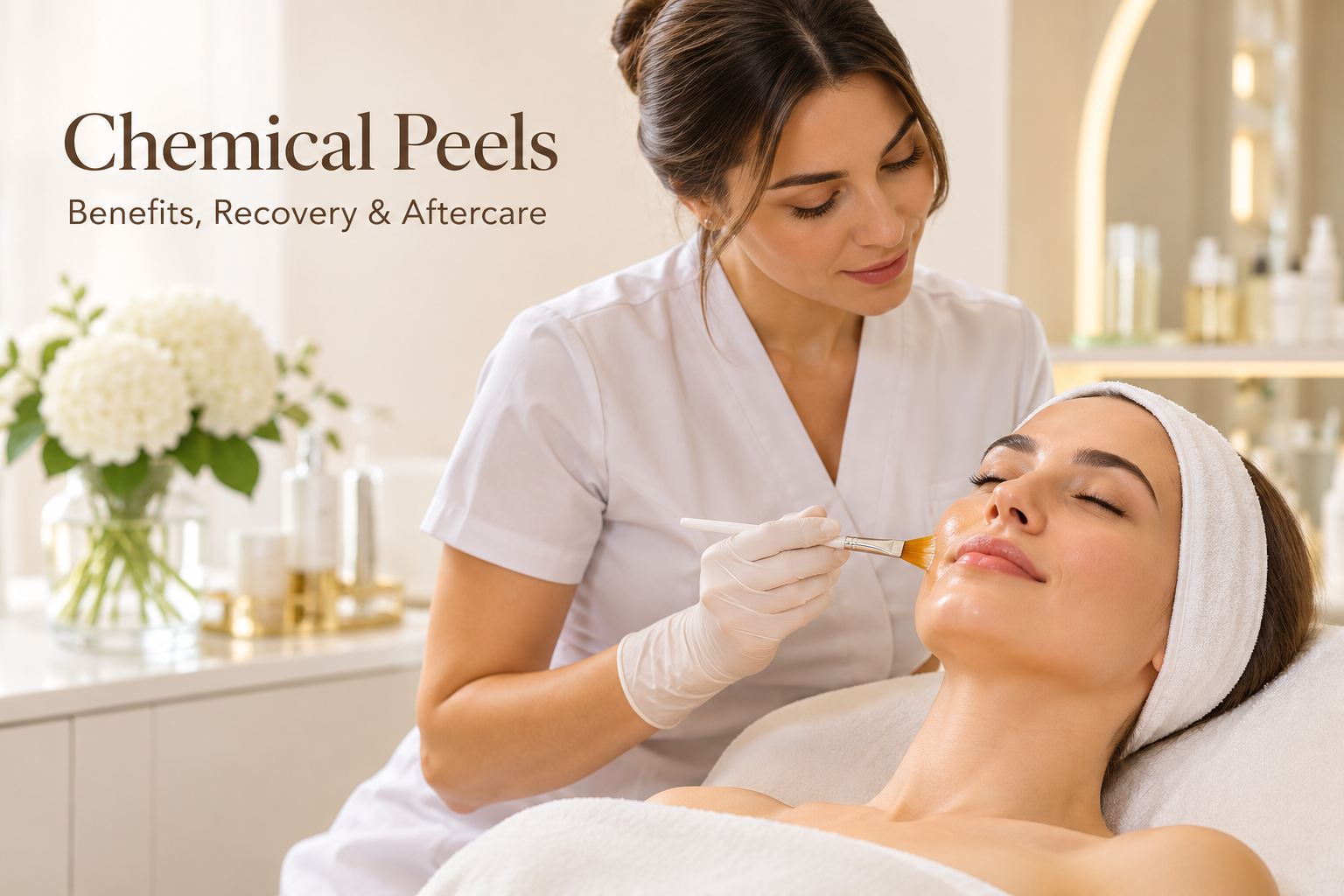
The selected chemical solution is applied carefully to the treatment area.
You may experience temporary tingling, warmth or mild stinging. The sensation varies according to the formulation and depth of treatment.
Step 4: Completion and Skin Protection
The peel is removed, neutralised or otherwise completed according to the product protocol.
Your practitioner may then apply suitable soothing or protective skincare products.
Step 5: Personalised Aftercare Advice
Before leaving, you should receive instructions covering skin cleansing, moisturising, sun protection and products or activities to avoid during recovery.
Following these instructions is essential for supporting healing and reducing the risk of complications.
5. How Long Does It Take to Recover From a Chemical Peel?
Recovery depends primarily on the type and depth of the peel.
Superficial peels: Mild redness, dryness or flaking may occur. Some people experience very little visible peeling, while others may notice several days of skin sensitivity.
Medium-depth peels: Recovery is generally longer and may involve more pronounced redness, peeling and temporary changes in skin appearance. Healing can take approximately one to two weeks.
Deep peels: These involve substantially greater recovery and medical considerations and should only be performed by appropriately qualified medical professionals.
It is important to understand that stronger treatments are not automatically better.
For some people, a carefully chosen superficial peel may be more appropriate than an aggressive procedure.
Your practitioner should explain the expected recovery period before you agree to treatment.
6. Essential Chemical Peel Aftercare Tips
Appropriate aftercare is one of the most important aspects of chemical peel treatment.
The skin may be more sensitive while recovering, and unnecessary irritation or sun exposure can increase the risk of complications.
Protect Your Skin From the Sun
UV protection is particularly important following a chemical peel.
Avoid direct sun exposure while the skin is healing and follow your practitioner’s guidance on when to apply sunscreen.
Once appropriate for the treated skin, use broad-spectrum sunscreen, generally SPF 30 or higher, alongside shade and protective clothing.
Remember that UV exposure can still occur during colder months in the UK.
Keep Your Skincare Routine Gentle
Use a mild cleanser and a moisturiser recommended for your skin.
Avoid introducing multiple new skincare products during recovery, as this can increase irritation.
Do Not Pick or Pull Peeling Skin
If flaking occurs, allow the skin to shed naturally.
Picking or pulling at peeling areas can damage healing skin and increase the risk of pigmentation changes or scarring.
Avoid Strong Exfoliating Ingredients Until Advised
Products containing retinoids, strong acids or abrasive exfoliants may be unsuitable during recovery.
Ask your practitioner when these products can be safely reintroduced.
Monitor Your Skin
Mild temporary irritation can be expected following some superficial peels.
However, severe pain, increasing swelling, spreading redness, blistering or signs of infection require prompt professional medical advice.
7. Why Autumn and Winter Can Be Convenient Times for Skin Treatments
Many people choose to review their skincare routines during autumn and winter.
Cooler weather and changes in daily activities may make it easier for some individuals to plan their treatments and avoid prolonged outdoor exposure.
However, chemical peels are not automatically safer simply because it is winter.
Sun protection remains essential throughout the year, and the most suitable treatment timing depends on your skin, lifestyle and recovery needs.
If you are considering a chemical peel before a special occasion, allow sufficient time for consultation, treatment and any expected recovery.
8. Chemical Peels vs Regular Facial Treatments: What’s the Difference?
Both chemical peels and traditional facials can form part of a skincare routine, but they serve different purposes.
A conventional facial may focus on cleansing, hydration, relaxation and general skin maintenance.
A professional chemical peel uses specific exfoliating ingredients to target selected skin concerns, often with a more structured treatment and recovery protocol.
Neither option is universally better.
If your main goal is relaxation and routine skincare maintenance, a facial may be suitable.
If you are concerned about uneven texture, superficial pigmentation or certain signs of ageing, a professional chemical peel assessment may be worth considering.
The important factor is matching the treatment to your individual needs rather than following trends.
9. How Often Should You Have a Chemical Peel?
There is no single treatment schedule suitable for everyone.
Some superficial peels may be repeated as part of a planned treatment course, while deeper treatments require much longer recovery intervals and may not be suitable for repetition.
The recommended frequency depends on:
Your skin type and sensitivity
The formulation and strength of the peel
Your treatment goals
Your skin’s response to previous sessions
Your overall skincare routine
A personalised treatment plan is preferable to following a fixed schedule without professional guidance.
10. Frequently Asked Questions About Chemical Peels
Are chemical peels painful?
Some people experience temporary tingling, warmth or stinging during treatment.
The intensity depends on the peel and individual sensitivity. Stronger treatments can cause more significant discomfort and require additional precautions.
Will my skin visibly peel afterwards?
Not necessarily. Some superficial chemical peels cause little visible peeling, while others produce noticeable flaking.
The amount of peeling does not reliably indicate how effective a treatment has been.
Can chemical peels help with acne scars?
Certain peels may improve superficial skin irregularities and pigmentation associated with acne.
However, deeper or indented acne scars often require different treatments, and results vary considerably.
Can I wear makeup after a chemical peel?
This depends on the peel and the condition of your skin.
Some superficial treatments allow makeup relatively soon, while stronger peels require a longer period without it. Always follow your practitioner’s specific advice.
Are chemical peels suitable for darker skin tones?
They may be, but formulation selection and practitioner experience are especially important.
Some peels carry a higher risk of post-inflammatory pigmentation changes, so an individual assessment is essential.
How soon will I notice results?
Some people notice improved surface texture or brightness after their skin has recovered.
Other concerns may require a series of treatments, and improvement is not guaranteed.
11. Professional Chemical Peel Treatments at Maria Beauty Clinic in Coventry
Choosing a professional skincare treatment should begin with understanding your skin rather than selecting a procedure based on appearance alone.
At Maria Beauty Clinic, we provide chemical peel treatments as part of our wider range of aesthetic and medical-grade skin services.
Our Coventry clinic welcomes clients who would like to explore suitable approaches to improving the appearance of their skin.
Whether your concerns involve dullness, uneven texture or selected pigmentation issues, a consultation can help establish realistic expectations and identify appropriate options.
We believe that informed choices, personalised care and sensible aftercare are essential parts of the treatment experience.
Book Your Skin Consultation in Coventry
If you are interested in learning whether a professional chemical peel may be suitable for your skin, contact Maria Beauty Clinic to discuss your concerns and available treatment options.
Maria Beauty Clinic
159A–160 Spon Street
Coventry, CV1 3BB
United Kingdom
Telephone: 02476 980690
Website: https://mariabeautyclinic.co.uk/
Explore our Chemical Peel treatments:
https://mariabeautyclinic.co.uk/services/item/chemical-peel/
Professional assessment is important before cosmetic skin treatments. Suitability, recovery and results vary between individuals, and no cosmetic procedure is risk-free.