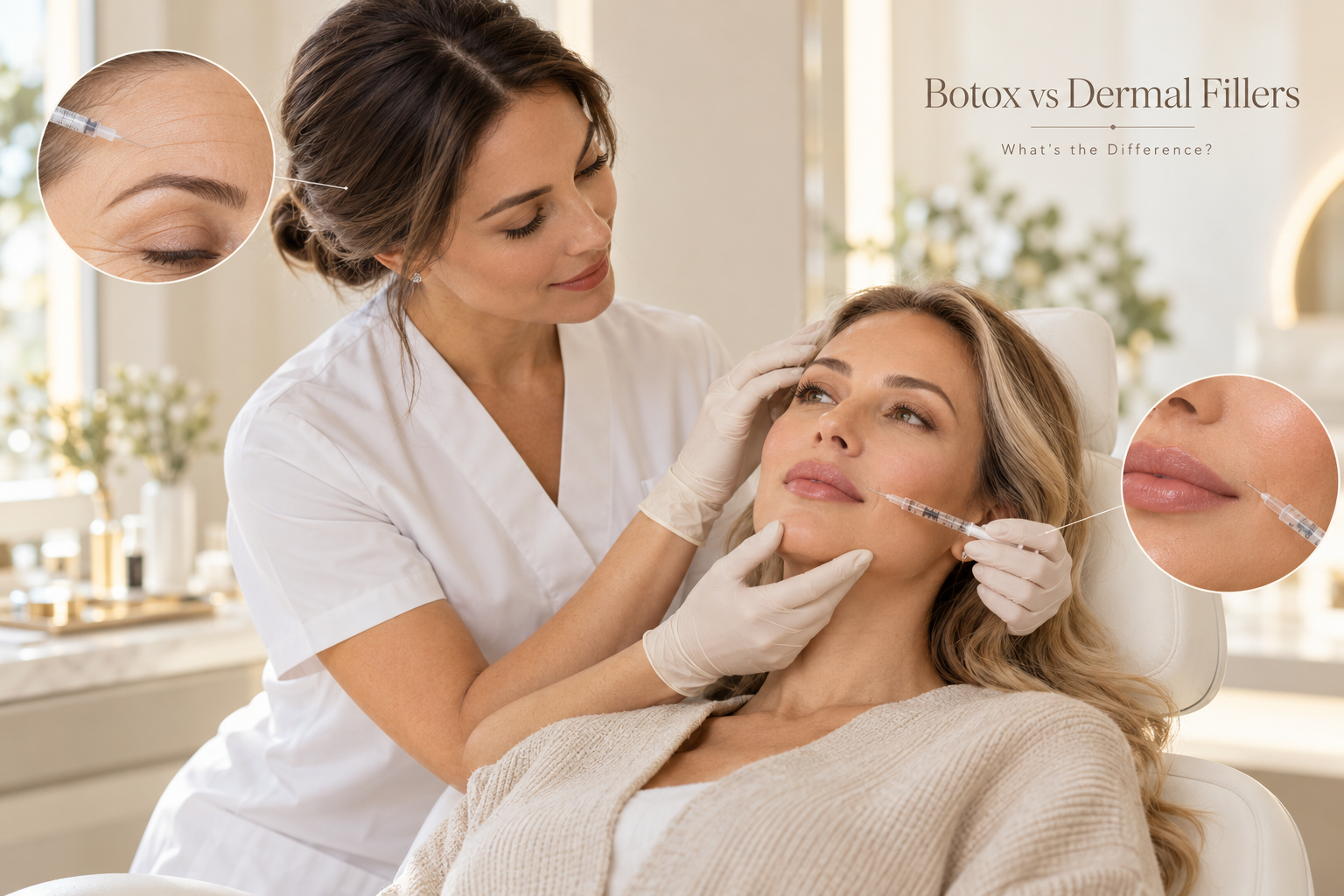
Botox and dermal fillers are two of the most widely recognised non-surgical aesthetic treatments, but they work in very different ways.
If you are considering an aesthetic treatment for facial lines, loss of volume or lip enhancement, understanding the difference between Botox vs Dermal Fillers can help you have a more informed conversation during your consultation.
At Maria Beauty Clinic in Coventry, treatment should always begin with considering your individual features, concerns and expectations rather than simply choosing a treatment because it is popular.
Here is a straightforward guide to the main differences between Botox and dermal fillers.
1. What Is Botox?
Botox is a commonly used brand name for a treatment containing botulinum toxin.
Botulinum toxin works by temporarily reducing activity in selected muscles. In cosmetic treatment, it may therefore be used to soften the appearance of certain facial lines that are associated with repeated muscle movement.
Examples may include lines created when we frown, smile or make other facial expressions.
One particularly important point is that botulinum toxin products such as Botox are prescription-only medicines in the UK. They must be prescribed following an appropriate consultation with a qualified healthcare professional. nhs.uk
The aim of treatment is generally not to change the entire appearance of the face, but to consider selected areas where muscle activity contributes to visible lines.
2. What Are Dermal Fillers?
Dermal fillers work very differently.
Rather than temporarily reducing muscle movement, fillers are injectable substances used to add volume, shape or definition to selected areas.
They are commonly used in areas such as:
- Lips
- Cheeks
- Selected facial contours
- Areas where volume has reduced over time
Different types of filler products are available, and the appropriate product and technique depend on the treatment area and the result being considered.
The NHS advises clients considering dermal fillers to ask what product will be used, where it comes from, and what training and experience the practitioner has. Serious complications, although uncommon, can occur, including infection, nerve damage and problems affecting vision.
This is why consultation and practitioner experience matter.
3. Botox and Fillers Treat Different Concerns
One of the easiest ways to understand Botox vs Dermal Fillers is to consider the type of concern being treated.
Botox is generally associated with lines caused or emphasised by muscle movement.
Dermal fillers are generally associated with volume, shape and contour.
For example, a client concerned about expression-related lines may be discussing a very different treatment from someone looking to add definition or volume to the lips.
This does not mean one treatment is better than the other. They simply work differently and are intended for different purposes.
4. What Are Dynamic and Static Lines?
You may hear practitioners talk about dynamic and static facial lines.
Dynamic lines are associated with facial movement. They may become more visible when you smile, frown or raise your eyebrows.
Over time, some lines can remain visible even when the face is relaxed.
The appropriate treatment depends on the location of the line, how it is formed, your facial anatomy and other individual factors.
For this reason, looking at a treatment menu alone cannot tell you exactly which procedure may be suitable.
5. What Can Dermal Fillers Be Used For?
Dermal fillers are often chosen by people who want greater definition or volume in particular areas.
One of the best-known examples is lip filler.
Lip filler may be used to add volume or improve definition, but the desired result can vary considerably from one client to another.
Some people want a very subtle enhancement, while others may be interested in a more noticeable change.
An appropriate treatment plan should take facial proportions and the client’s own preferences into consideration rather than automatically aiming for the greatest possible volume.
Maria Beauty Clinic currently offers both Botox and filler treatments, including lip filler, as part of its aesthetic services in Coventry.
6. Which Treatment Gives a More Natural Result?
There is no simple answer because natural-looking results depend on much more than the name of the treatment.
Factors may include:
- The treatment selected
- The amount used
- The area treated
- Facial anatomy
- Practitioner technique
- The client’s expectations
Both Botox and dermal fillers may be used with a subtle approach.
The goal of a professional consultation should be to discuss the result you want and whether that expectation is realistic and appropriate for you.
It is generally better to think in terms of individual treatment planning rather than trying to copy the exact appearance of another person.
7. How Quickly Do Results Appear?
Botox and fillers also differ in how results develop.
With dermal fillers, changes in volume or shape may be noticeable relatively quickly after treatment, although swelling or other temporary effects can influence the appearance immediately afterwards.
Botulinum toxin treatment develops differently because its effect on the targeted muscles is not necessarily immediate.
Your practitioner should explain when changes are normally expected, what temporary effects may occur and when the result should be reviewed.
Results vary between individuals, so cosmetic treatments should not be presented as producing identical results for everyone.
8. How Long Do Botox and Fillers Last?
Neither Botox nor most dermal filler treatments should be regarded as automatically permanent.
The duration of a cosmetic result can vary according to:
- Product used
- Treatment area
- Amount administered
- Individual metabolism
- Muscle activity
- Lifestyle and other personal factors
Some clients decide to have future maintenance treatments, while others may choose not to repeat the procedure.
Before treatment, ask how long the expected effect may last and what happens if you decide not to continue.
9. What Are the Possible Side Effects?
All cosmetic procedures involve some level of risk.
The NHS advises people considering cosmetic treatments to research the procedure carefully and discuss risks, expected results and practitioner experience before going ahead.
Temporary effects after injectable treatments may include things such as swelling, tenderness, redness or bruising, although risks vary according to the treatment.
Botulinum toxin and fillers also have their own specific potential complications.
You should be given the opportunity to discuss these before consenting to treatment and understand what to do if you experience an unexpected reaction.
10. Why Is the Consultation So Important?
A professional consultation is one of the most important stages of any injectable aesthetic treatment.
It allows you to discuss:
- What you would like to change
- Why you are considering treatment
- Your medical history
- Medicines you are taking
- Previous cosmetic procedures
- Allergies or previous reactions
- The expected result
- Risks and possible side effects
- Aftercare
- Alternative options
For Botox specifically, you should also know who is prescribing the medicine and who will actually perform the injection. NHS guidance specifically recommends checking the training, experience and insurance arrangements of the people involved.
A good consultation should also give you enough information and time to make your own decision.
11. Can Anyone Have Botox or Dermal Fillers?
No.
There may be medical, practical or individual reasons why an injectable treatment is not appropriate for a particular person.
There is also an important legal age restriction in England.
Since October 2021, it has been illegal to administer cosmetic botulinum toxin or cosmetic filler injections to someone under the age of 18 in England, except in specific medically approved circumstances. It is also illegal to arrange or book these cosmetic treatments for someone under 18. GOV.UK
For adults, suitability still needs to be considered individually.
12. Can Botox and Dermal Fillers Be Used Together?
Because Botox and fillers work differently, some clients may discuss more than one type of treatment as part of an overall aesthetic plan.
However, this does not mean that combining treatments is appropriate or necessary for everyone.
The decision should depend on the individual’s facial features, treatment goals, medical suitability and professional assessment.
More treatment does not automatically mean a better result.
Botox vs Dermal Fillers: Which May Be Right for You?
If your main concern relates to lines associated with facial movement, a consultation may include discussion of botulinum toxin treatment.
If your goal involves adding volume or enhancing definition, dermal fillers may be more relevant to the conversation.
But the correct choice cannot be determined from an online article alone.
Your face, medical history, expectations and treatment goals all matter.
That is why the best first step is a professional consultation where you can discuss what you would like to achieve and understand the available options.
Botox and Dermal Fillers at Maria Beauty Clinic in Coventry
Maria Beauty Clinic offers professional Botox and Filler treatments in Coventry, including treatments for facial aesthetics and lip enhancement. The clinic also offers Botox treatment in relation to hyperhidrosis. Maria Beauty Clinic
If you are considering treatment, you can visit our Botox and Filler service page for more information about the services available.
Before proceeding with any injectable cosmetic treatment, make sure you understand the proposed treatment, expected results, possible risks and aftercare.
Contact Maria Beauty Clinic in Coventry to arrange a consultation and discuss which treatment options may be appropriate for your individual concerns and goals.